What is LLM cost observability?
LLM cost observability is the practice of tracking, attributing, and forecasting spend on large language models across every provider — by model, project, and team — so you can see exactly what your AI costs and catch overspend early. Owlmeter provides this for OpenAI, Anthropic, AWS Bedrock, and Google Gemini.
How does Owlmeter track my LLM costs?
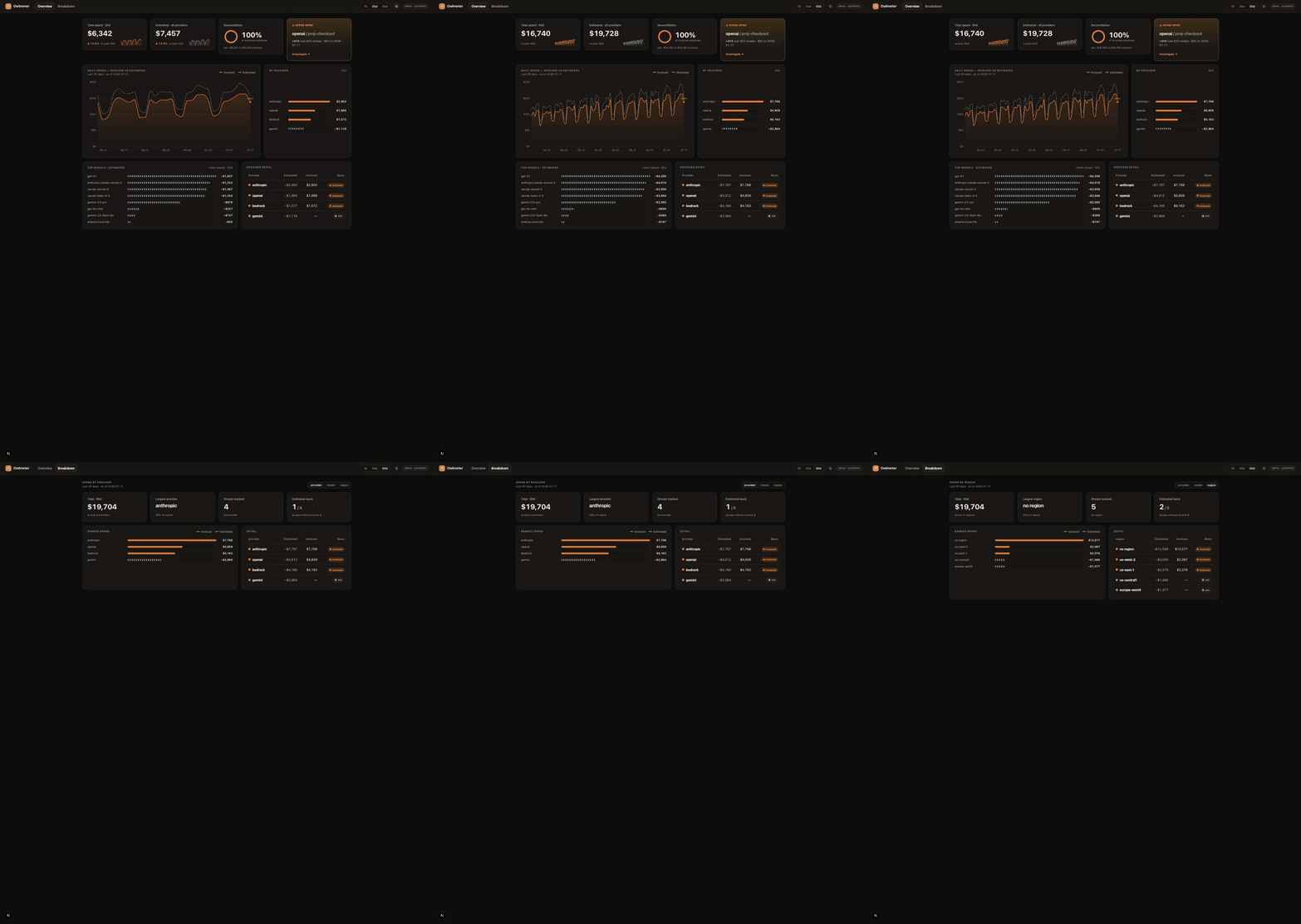
Owlmeter pulls spend and usage from each provider's admin and billing APIs (Cost Explorer for Bedrock, Cloud Monitoring for Gemini) on a schedule, normalizes it into one schema, and serves dashboards, a daily digest, and spike alerts. It is pull-only: read-only keys, never in your request path, no SDK or proxy.
How do I track OpenAI, Claude, and Gemini spend in one place?
Connect read-only keys and Owlmeter pulls spend and usage from each provider — OpenAI, Anthropic (Claude), AWS Bedrock, and Google Gemini — into one normalized view. It attributes cost by model, project, and team, badges token-based estimates against invoiced dollars, and alerts you when spend spikes. Pull-only: it never sits in your request path.
How is Owlmeter different from an AI gateway or LLM proxy?
Gateways and proxies sit inside your request path to route or log calls, which adds latency and a potential point of failure. Owlmeter is pull-only: it reads billing and usage data after the fact — never your prompts or responses — so a connected key can never affect production traffic. You get cross-provider cost visibility without putting anything between your app and the provider.
Does Owlmeter add latency or touch my API requests?
No. Owlmeter is pull-only — it never sits between your application and the provider, and it never sees your prompts or responses. There is zero added latency and zero request-path risk.
How much does the OpenAI API cost?
OpenAI API cost depends on the model and the tokens used — input and output are priced separately — so two teams on the same plan can pay very differently. Owlmeter shows your actual OpenAI spend, invoiced dollars plus per-model token estimates, so you track what you really pay rather than list prices.
Which providers does Owlmeter support?
OpenAI, Anthropic, AWS Bedrock, and Google Gemini today, with more providers planned.
What is the difference between invoice and estimated cost?
Invoice cost is the real dollar amount from a provider's billing API. Where a provider can't split cost finely — per model, per hour, or usage-only providers like Gemini — Owlmeter estimates cost from token usage times published prices, and always badges it as an estimate. A reconciliation ratio shows how closely estimates track your real invoice.
How is Owlmeter different from provider dashboards?
Provider consoles show one provider, with limited attribution and no cross-provider view, estimation, or alerting. Owlmeter unifies all your providers, attributes spend by model, project, and team, badges estimates honestly, and alerts you when spend spikes.
What's the best way to track LLM costs across providers?
Look for four things: one cross-provider view, attribution down to model, project, and team, honest handling of estimated versus invoiced dollars, and spike and budget alerting. A pull-only tool — one that reads billing and usage but never sits in your request path — gives you this without adding latency or a failure point. Owlmeter is built for exactly this across OpenAI, Anthropic, AWS Bedrock, and Google Gemini, with a daily digest and spike alerts today and budgets on the way.
Is it secure — what can a connected key do?
Keys are read-only, encrypted at rest, and only ever read spend and usage — never your prompts or responses. AWS Bedrock uses STS assume-role, so no long-lived AWS secret is stored. Because Owlmeter is pull-only, a key can never affect your production traffic.